CELOS X Machine
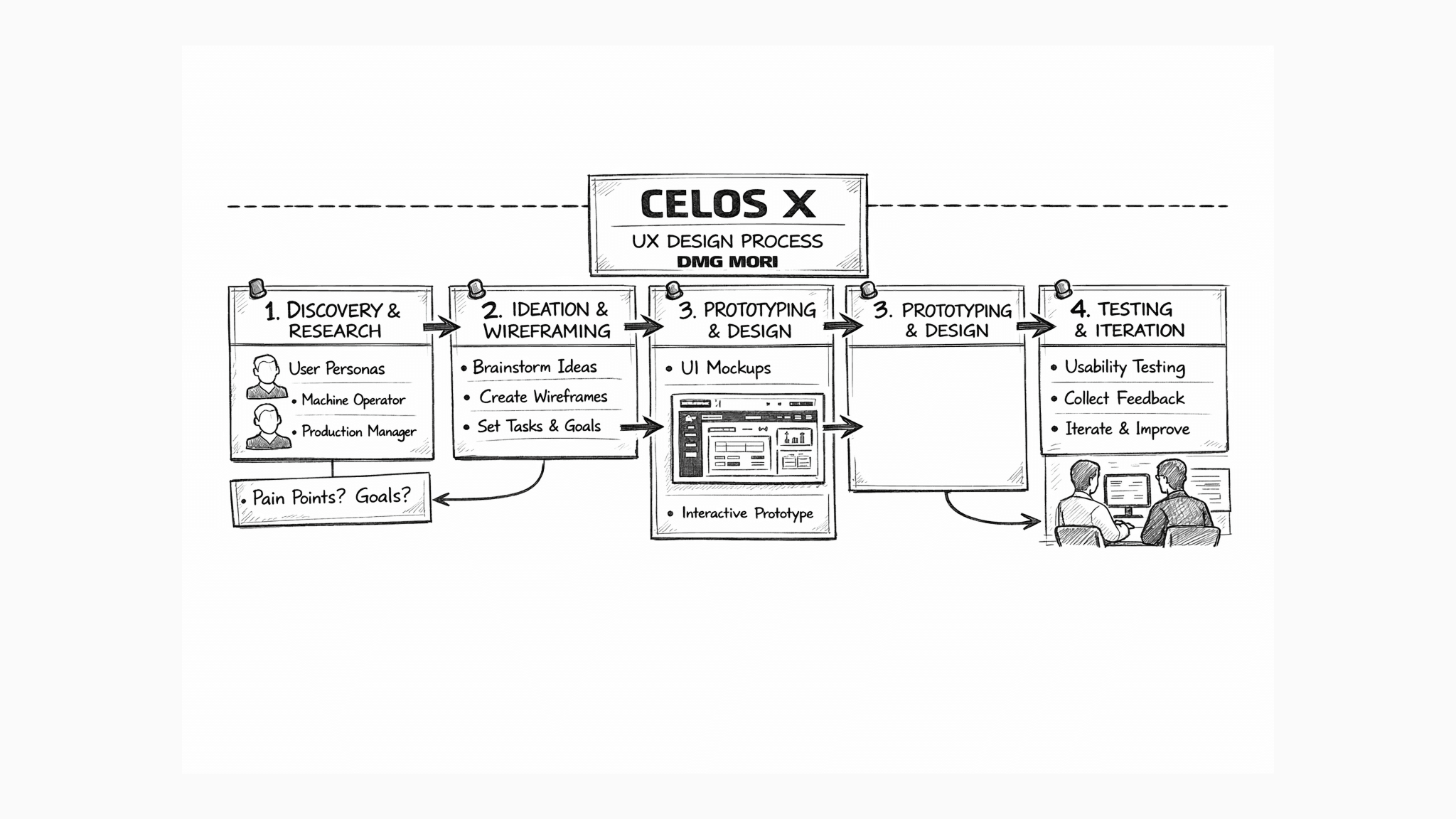
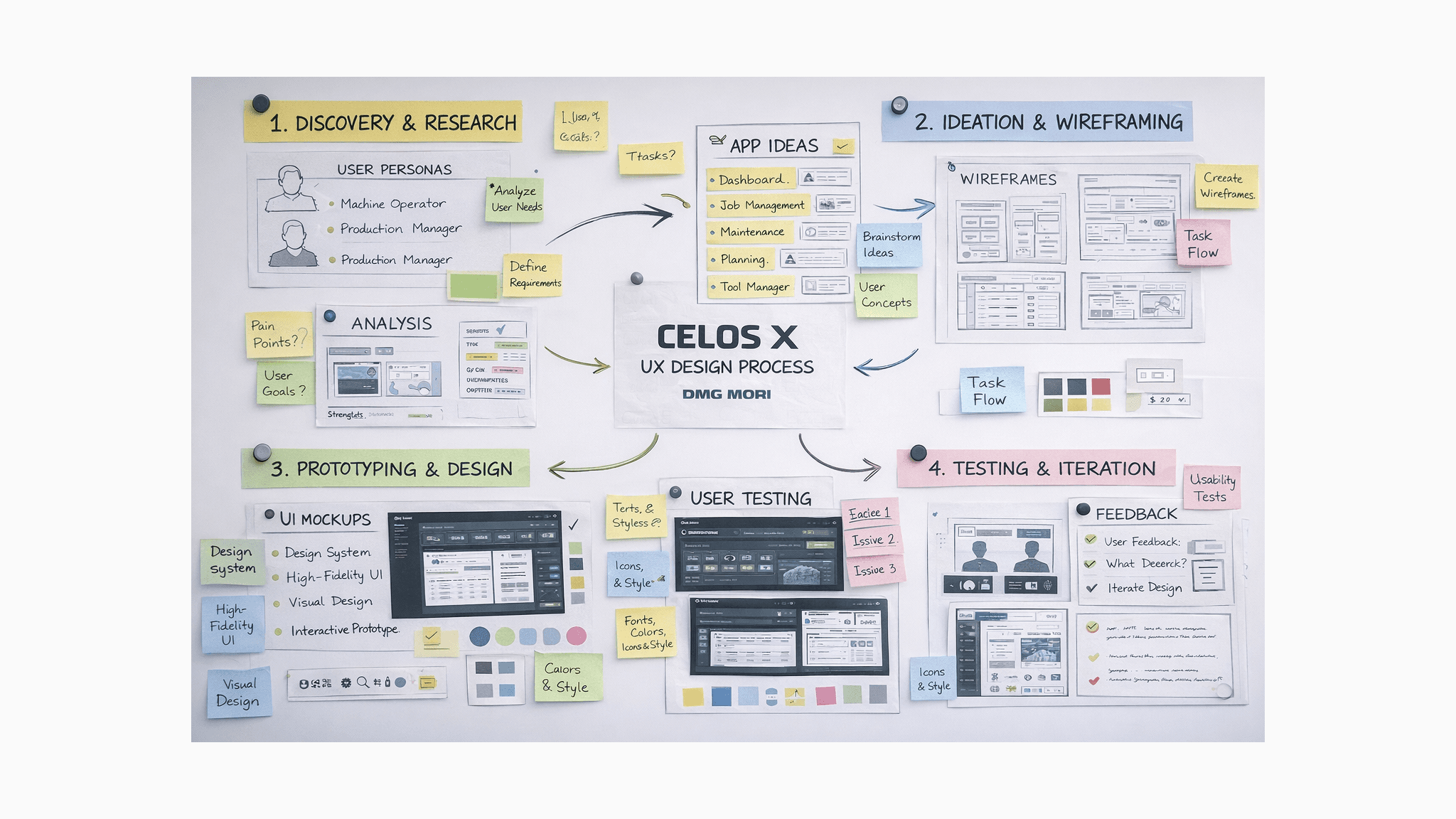
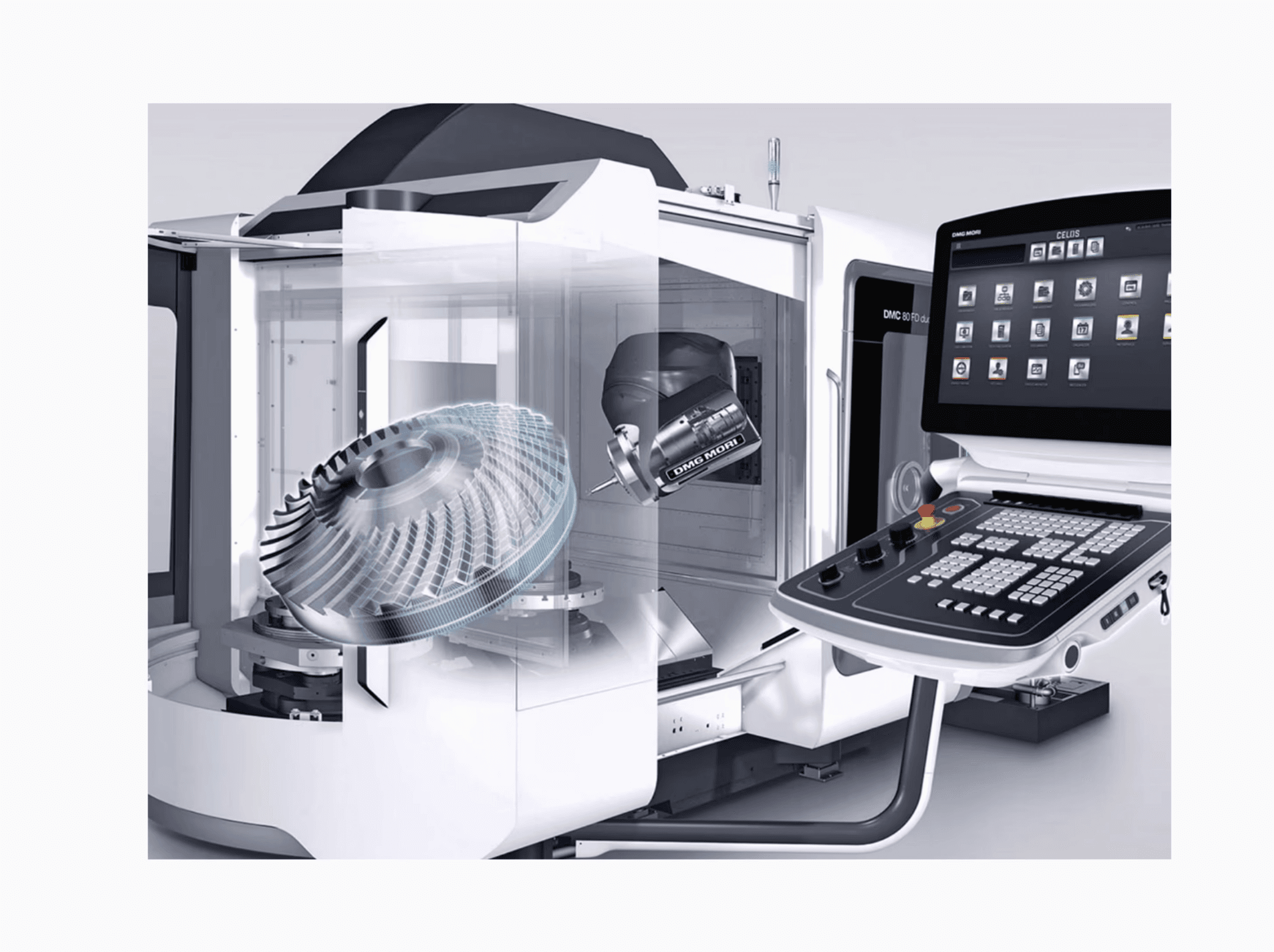
CNC operators need instant clarity in time-critical moments, but the UI patterns and alert logic were inconsistent—especially for users with color-vision deficiency (CVD). I designed a CELOS-aligned interaction model with standardized navigation, machine states, and alerts using redundant cues (icon + label + hierarchy—not color only). I owned the interaction and system logic, built reusable components and state rules, and validated key flows in a Framer prototype.
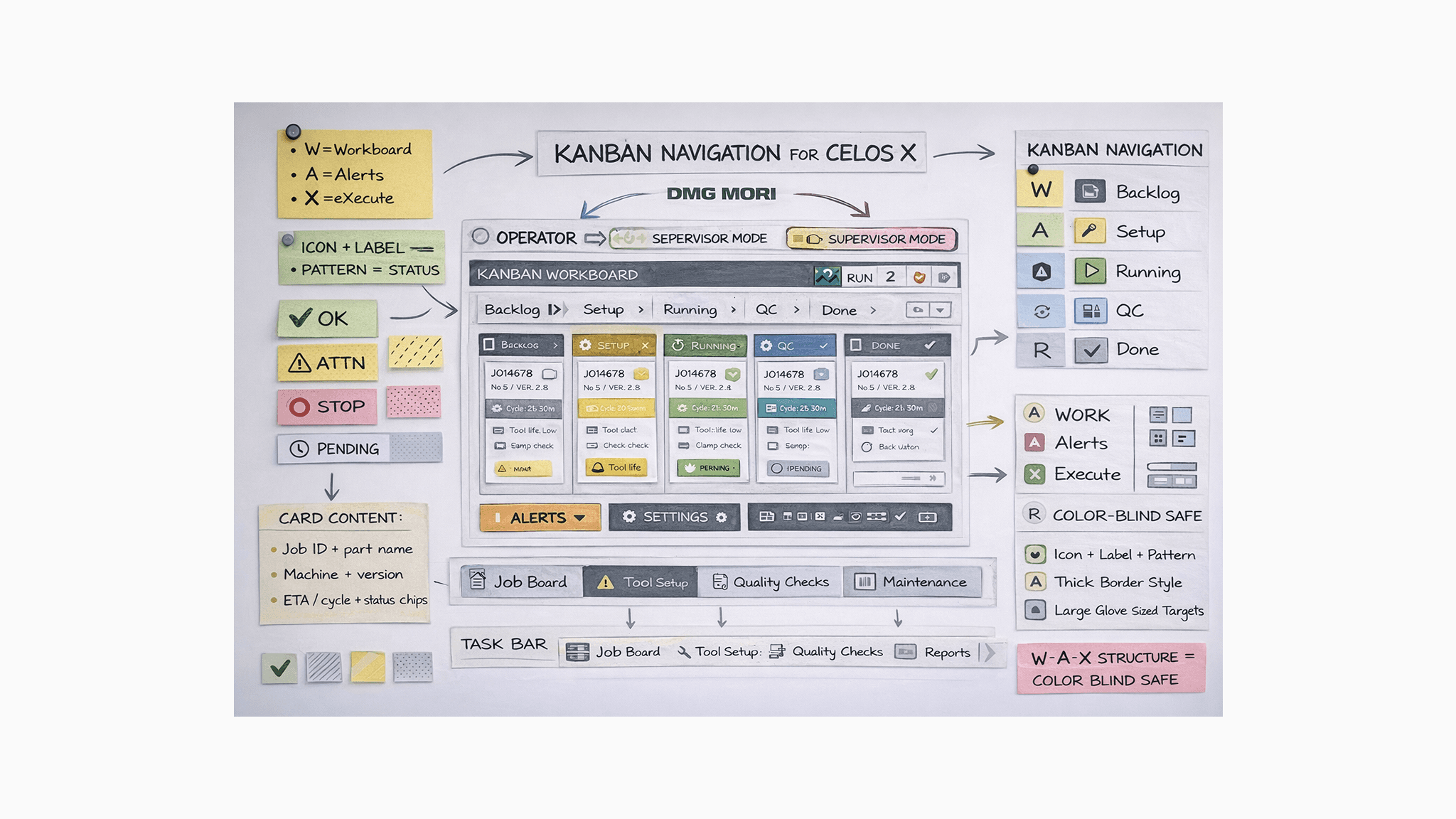
Objective: Build a scalable design system with color-blind safe UI states.
Built a scalable, token-driven design system that supports rapid lo-fi exploration through production-ready hi-fi UI, with a consistent state model (default, hover, active, disabled, error, warning, success). Designed color-blind safe state communication using redundant cues (icon + text label + hierarchy, plus shape/outline differences and contrast-safe tokens) so meaning is never conveyed by color alone. Validated and refined CNC setup/run/monitor/recover workflows through on-site research at the DMG MORI Hub, then translated findings into reusable UI rules and tested updated behaviors end-to-end in a high-fidelity Framer prototype aligned with CELOS standards.
Outcome: Validated on-site at the DMG MORI Hub, refined CNC workflows.
Validated the redesigned CNC workflows on-site at the DMG MORI Hub, then refined the setup/run/monitor/recover flows to match real operator attention, timing, and constraints. Standardized alarm and status patterns with a clear severity hierarchy and color-blind safe cues (icon + label + layout + contrast-safe styling), and confirmed the improvements in a high-fidelity Framer prototype aligned with CELOS standards. PROBLEM: Operators needed faster, error-resistant control of complex machine workflows in an environment where mistakes are costly. SUCCESS METRICS: Task time ↓, operational errors ↓, training time ↓, usability score ↑. CONSTRAINTS: Industrial context; legacy/technical limits; safety-critical edge cases; accessibility requirements (color-blind safe cues); limited on-site validation time. KEY TRADEOFF: Prioritized reliability + predictable states over “fancy” interactions. MY RESPONSIBILITY: Mapped workflows + state model, designed UI patterns, validated with operators, and iterated toward production-ready specs.